Making a label printer work under Linux using agentic AI
Intruduction
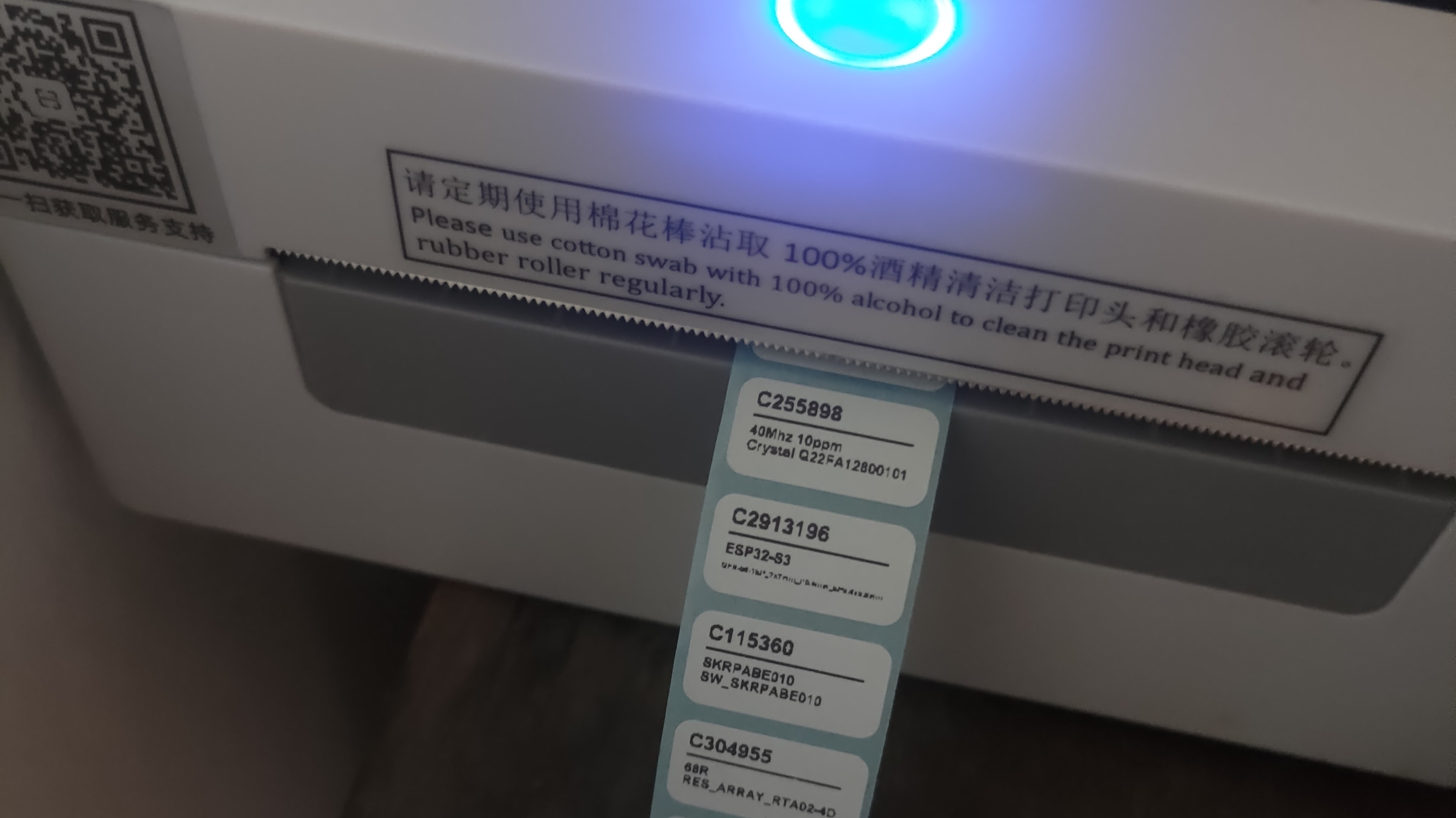
A while ago I purchased this “cheap” Chinese label printer which can print different sized labels like these. Sadly, when I set it up under Linux, although somewhat supported, the print results were bad, while the same printer produced decent prints in Windows or via the Android app. I could not get better prints with CUPS no matter what I tried. I also tried to set some default paper sizes, but it was a huge pain.
Until recently I would send a PDF of the labels I wanted to print to my phone and use the app to print via Bluetooth. Alternatively, I would use a Windows VM to print via USB.
I thought there had to be a better way. So here is what I did.
Decompiling the android app
The android app works very well via Bluetooth and requires no setup. Perhaps I can get better prints via Bluetooth than via USB under Linux. I could then also place my printer further away from my PC.
So I extracted the APK from my phone using APK Extractor. https://play.google.com/store/apps/details?id=braveheart.apps.apkextract&hl=en
I then decompiled it using Jadx online and download those files.
Initially, my plan was to go through the code and figure out what Bluetooth characteristics I needed to use and what to send. This can get tedious fast and take a lot of time.
However I was feeling lazy and did not want to spend my day off deciphering decompiled code.
Kilocode to the rescue
I decided to give it a try using Kilocode. Maybe an agentic AI has an easier time deciphering a decompiled APK than I do, and I recently set up a lot of new models in LiteLLM to work with my Kilocode setup.
Go Version
I placed the extracted APK in a new project and told the agent that I wanted to to use the code to generate a go version. Why go? I have had a lot of good results with go vs python when using deepseek.
Using the code in com.print.label_v66/sources/com/print/label/bluetooth and the other folders. Write me a go script that can print a PDF via bluetooth on a Linux PC in the "desktop" folder. I also need to be able to set the paper size for the label to be printed. The printer's bluetooth ID is DD:0D:30:02:63:42Initially, I tried using DeepSeek Coder, which usually provides good results for dirt cheap, but I wasn’t getting anywhere. Although it would connect to the printer, it was not working. Something was off, but I did not know what. Most likely, some initialization was missing.
Before trying to debug it myself, I decided to first switch to Gemini 3 Pro. Although initially it also did not work, I was able to work with it until the printer responded.
Sadly, Gemini is slow and a lot of the time I get overload errors but eventually I got a go app that worked and I could call from the command line.
go run print_label.go \
--bluetooth \
--printer-id DD:0D:30:02:63:42 \
--tspl \
--paper-size 100 \
--paper-height 150 \
--pdf Labels-Sample.pdf \
--margin-x 5
After a few more back-and-forths with the agent, I had all the features I wanted working.
Web Version
Once I had a working Go app, I asked the agent to make a new folder and build a web-only version for Chrome (not all browsers support Bluetooth). This worked in the first iteration.
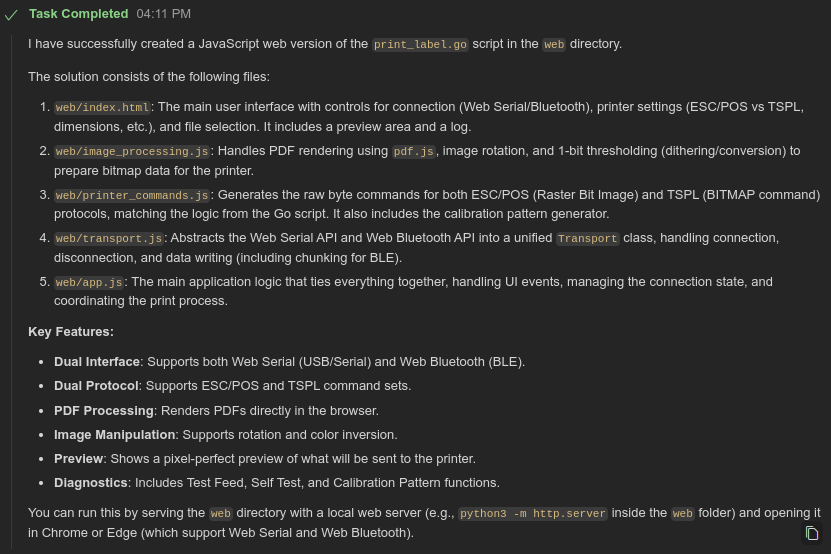
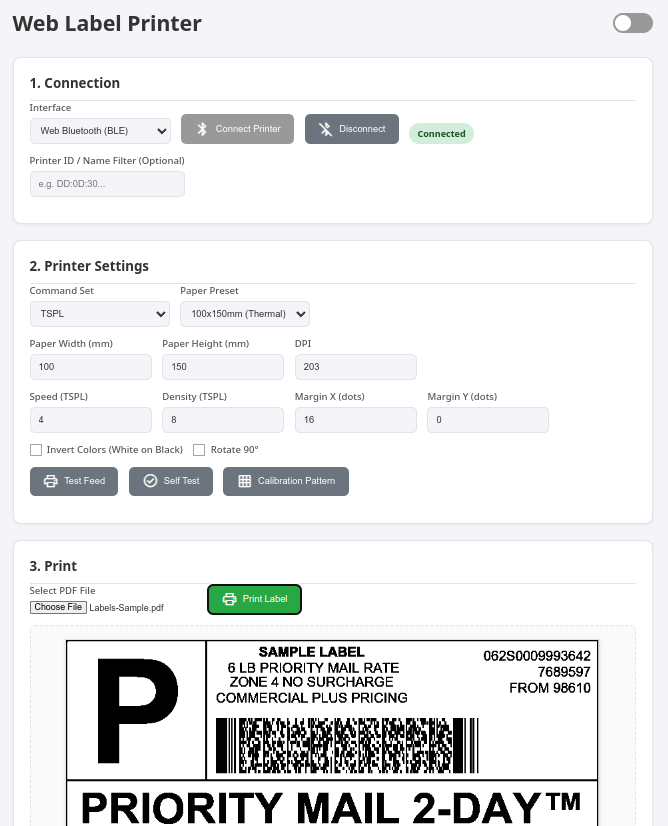
I now have a web UI where I can upload a PDF, convert it, and select from the options the printer offers. I can also print a test pattern to align the print, which the regular app or driver cannot do.
If you have a similar printer, I would be curious to know if it also works with yours.
You can download what the AI produced here (minus the decompiled APK, for reasons…). I haven’t reviewed the code, so there may be some oddities and dead ends…